
For a long time, technology was synonymous with infrastructure. It was what supported company operations, optimized workflows, and made processes more efficient. But this logic is no longer enough to handle a world in which change has become permanent. Today, technology defines the business itself. It is a driver of transformation, imagination, and the construction of possible futures.
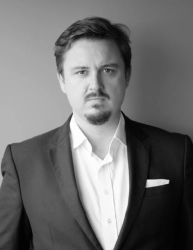
“When technology migrates and becomes widespread, it needs to gain space within our constructions,” says Kim Trieweiler, researcher at the Guilda and specialist in Futures Studies.
“I believe it is a friend to the local context and, at the same time, still does not take center stage in fundamental strategic discussions or new business development. So, we need to bring it to the center of the conversation in a more intentional way,” Trieweiler adds.
From tool to vector of transformation
In the transition from digital as support to digital as strategy, there is a shift in mindset. The companies growing the fastest are not only asking “which technology should we use?” but “which future do we want to enable?” It’s a subtle but profound difference that separates simple digitalization from true innovation.
“This is at the core of the idea of digitalization,” Kim explains. “Because we digitalize processes, and by doing so, we transform an existing process into a 2.0 version. However, we fail to understand that this change completely transforms the business.”
He cites the example of e-commerce by describing the typical digital sales model many companies present. When comparing it to a physical store, he points out the similarities:
- E-commerce has a shopping cart;
- A banner that resembles a storefront;
- Item numbers.
“It looks very much like a physical store. But there are business models that are fully digital.” This type of thinking broadens the scope of innovation: it stops being just continuous improvement and becomes the creation of real alternatives.
To innovate is to create alternatives
The central idea of Futures Studies, the field in which Kim works, is precisely this: to view innovation as a mechanism for creating alternatives. Every new technology—whether AI, blockchain, immersive realities, or biotechnology—expands the range of present-day possibilities and redefines what we understand as value.
“Technologies cannot be accessories,” Kim emphasizes. “They must enter the center of the discussion and the center of the business. Each of these technologies enables business in different ways.”
He mentions augmented reality as an example of this diversity of applications:
“If I think of it inside an industry, for example, there are already applications where a technician repairing a machine can see what needs to be done and is guided through the fix via AR glasses. But we can also think of augmented reality in fashion e-commerce, where the person can try on the piece beforehand. These are completely different uses of very similar technology.”
The conclusion is clear: technology is not just for optimization—it is also for creating alternatives.
Possible futures and valuing uncertainty
Futures Studies propose an inversion of the traditional business logic: instead of predicting tomorrow, they seek to project possible futures. This approach combines analysis and imagination, transforming reactive companies into exploratory organizations capable of leading what comes next.
Kim explains that the first step is making teams “more future-literate.” “The path is to explore all available content across various platforms. Innovation is already a more widespread topic, and many people know its methods. The same needs to happen with futures studies.”
But he warns that thinking about the future requires something harder: appreciating uncertainty. “Ayalon Milgram says that we usually treat uncertainty as something negative, but it is within uncertainty that important spaces for transformation exist. When we look for trends, we are usually looking for certainty, and then we end up creating the ‘most probable.’”
In this context, organizational ambidexterity becomes essential: improving what already works well while also exploring new alternatives. “These alternative scenarios are possible futures,” he summarizes.
Purpose and technology as allies
Examples from companies like Patagonia, Itaú, and Natura show that it is possible to combine purpose and technology authentically. These are organizations that experiment with new models, prototype desirable futures, and inspire others to do the same.
“These companies create a sense of possibility,” Kim observes. “Because many times, until someone does it for the first time, we think it’s impossible—that no one would buy it, no one would do it. When we see a company doing it, we gain a sense of permission: ‘If they did it, I can do it too.’”
This “permission to imagine” is powerful fuel for innovation and a reminder that technology should enable futures—in the plural—not just a single path. “It’s about creating futures that don’t eliminate other futures,” Kim says. “Futures that do not prevent other people from existing and acting.”
From hype to meaning
In a world driven by trends, perhaps the most relevant question for leaders and companies is also the simplest and most difficult:
“Am I investing in this because everyone else is, or because it is important for my business?”
As Kim reminds us, “businesses sometimes get carried away by hype and lose focus—and when that happens, disillusionment comes too.”
Thinking about the future, therefore, is more than tracking technological movements: it is giving them direction. It is viewing technology as a mechanism for strategic imagination, an ally in creating alternatives that expand the field of possibility.
And perhaps this is the question that will define the next decade: